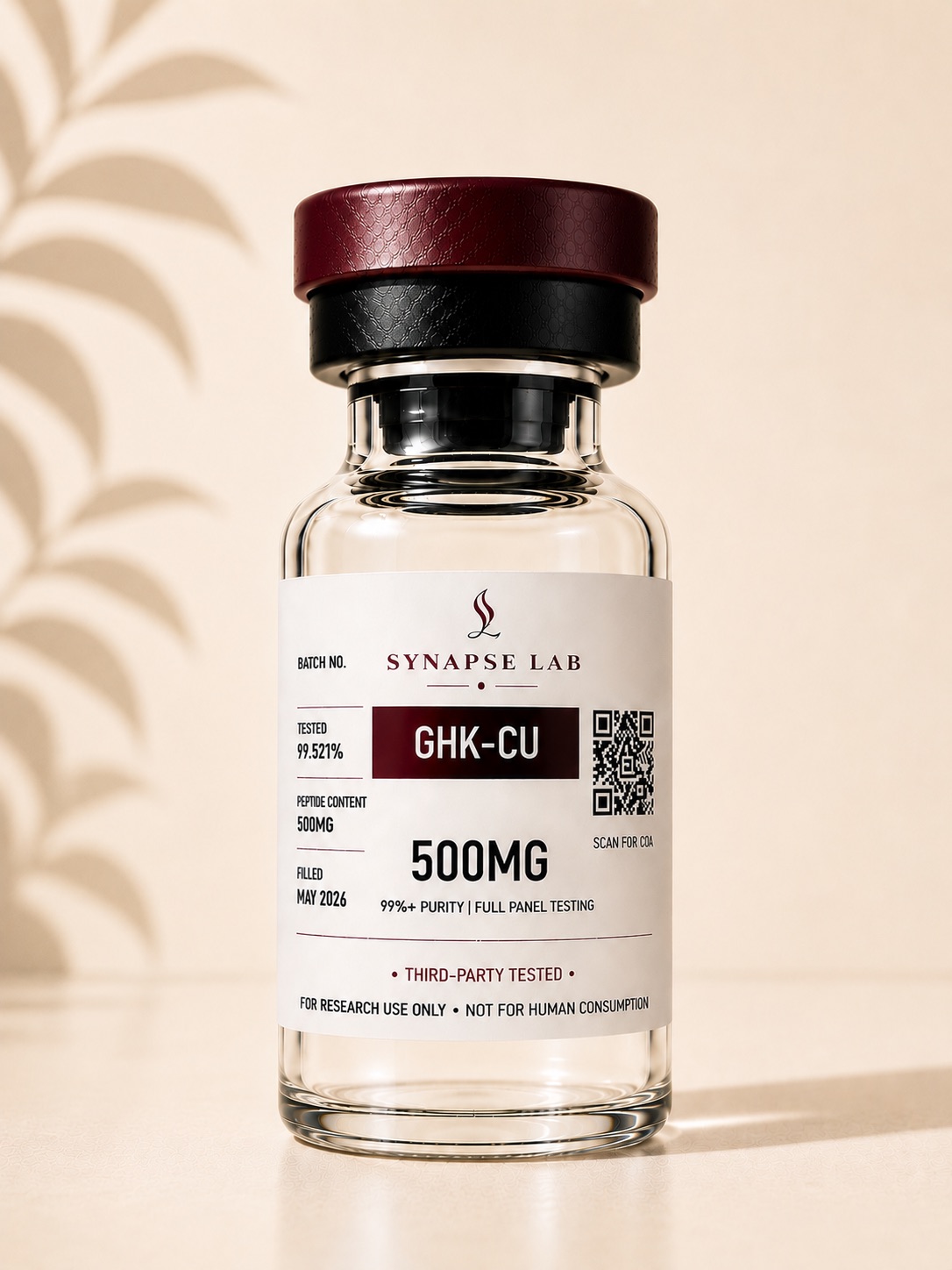
Research use only. Not for human consumption.
GHK-Cu (Copper Peptide)
verified_user

Certificate of Analysis

Lab reports coming soon. HPLC, Mass Spec & endotoxin testing.

description

MSDS

Material Safety Data Sheet coming soon. Handling & storage info for laboratory use.

GHK-Cu (Copper Peptide)

Copper Tripeptide Complex

€19.99
1
verified99%+ PurityanalyticsHPLC TestedfingerprintISO 17025 VerifiedscienceLyophilized Powder

Compound Overview

GHK-Cu, also known as copper tripeptide-1, is a naturally occurring copper-binding peptide composed of the amino acid sequence glycyl-L-histidyl-L-lysine complexed with copper ions. First identified in human plasma, GHK-Cu has been extensively studied in research involving tissue remodeling, extracellular matrix regulation, dermal regeneration, inflammatory signaling, and cellular repair pathways. The concentration of endogenous GHK-Cu has been observed to decline with age, leading to continued scientific interest in its role within regenerative and age-associated biological processes. Within laboratory environments, GHK-Cu has demonstrated broad investigational relevance across studies examining collagen synthesis, fibroblast signaling, antioxidant activity, wound response pathways, angiogenesis, and skin structure maintenance. Researchers have also explored its potential interactions with gene expression networks associated with cellular restoration, oxidative stress regulation, and tissue integrity. Due to its copper-binding affinity and biological stability, GHK-Cu has become one of the most widely researched peptides in regenerative and cosmetic science applications. Manufactured to strict research-grade standards, each batch undergoes independent analytical verification through ISO-accredited third-party laboratories for purity, identity, and consistency.

Molecular Formula: C14H23CuN6O4 Molecular Weight: 340.38 g/mol Other Known Titles: Copper Tripeptide-1, GHK Copper Peptide

Experimental investigations have suggested that GHK-Cu may influence extracellular matrix remodeling through interactions with collagen-associated signaling pathways and tissue repair mediators. Research models have indicated potential increases in collagen synthesis, glycosaminoglycan production, fibroblast activity, and angiogenic signaling following peptide exposure. Additional studies have explored its relationship with decorin regulation and tissue inhibitor metalloproteinases (TIMP-1 and TIMP-2), both considered important in structural tissue maintenance and wound repair dynamics.

Researchers have further proposed that the peptide’s copper-binding properties may support enzymatic systems associated with tissue organization, cellular regeneration, and matrix stabilization within damaged or aging tissues.

A substantial portion of GHK-Cu research has focused on dermal biology and skin structure studies. Laboratory investigations suggest the peptide may support extracellular matrix integrity while influencing skin elasticity, thickness, texture, and barrier function. Experimental models have also examined its interactions with fibroblast proliferation and signaling pathways associated with aging skin architecture.

Studies involving cultured skin cells have reported potential modulation of genes linked to collagen production, antioxidant defense systems, inflammatory mediators, and cellular repair pathways. These observations have positioned GHK-Cu as a widely researched compound within regenerative dermatological science and cosmetic peptide research.

Researchers have evaluated GHK-Cu in experimental models involving follicular signaling and scalp tissue biology. Preliminary findings suggest the peptide may interact with pathways associated with follicular size, vascular support, and dermal papilla activity. Additional studies have investigated whether GHK-Cu may influence growth factor expression and cellular communication involved in follicular cycling and tissue support surrounding the hair follicle environment.

Its proposed role in microvascular regulation and extracellular matrix support has led to continued investigation within hair biology and regenerative scalp research models.

Research has explored the potential antioxidant properties of GHK-Cu across several oxidative stress models. Experimental findings suggest the peptide may interact with reactive oxygen species (ROS) regulation pathways while supporting antioxidant defense mechanisms associated with cellular resilience.

Investigations have examined possible modulation of oxidative markers including glutathione balance, lipid peroxidation activity, and inflammatory signaling cascades. Researchers have also studied potential interactions with the Nrf2 pathway, a key regulator of antioxidant response systems, alongside inflammatory mediators such as NF-κB.

These experimental observations have contributed to broader interest in GHK-Cu as a peptide relevant to cellular stress adaptation and tissue maintenance research.

Laboratory studies have suggested that GHK-Cu may influence the expression of a wide range of genes associated with tissue remodeling, inflammation regulation, DNA repair, cellular growth, and structural protein synthesis. Some investigations propose that the peptide may help restore or normalize expression patterns linked to damaged or aged cellular environments.

Researchers have additionally explored its potential role in regulating apoptosis-related signaling pathways, cellular turnover mechanisms, and regenerative transcription factors involved in tissue repair responses.

Experimental models involving inflammatory tissue conditions have suggested that GHK-Cu may interact with cytokine-related signaling pathways and oxidative stress mediators. Studies have explored possible reductions in pro-inflammatory markers including TNF-α and IL-1β alongside modulation of neutrophil-associated oxidative activity.

Additional research has examined whether GHK-Cu may support cellular resilience through regulation of inflammatory transcription pathways and antioxidant signaling systems under oxidative stress conditions.

GHK-Cu peptide is supplied strictly for laboratory and research purposes only. Not for human consumption.

The Synapse Quality Standard

Every compound undergoes a rigorous multi-stage verification process before receiving our seal of approval.

biotech

HPLC Testing

High-performance liquid chromatography ensures precise purity measurement for every synthesized batch.

analytics

Mass Spec Verification

Mass spectrometry confirms molecular identity and detects trace impurities at parts-per-billion sensitivity.

science

Endotoxin Analysis

LAL assay screening for bacterial endotoxins, kept well below industry safety thresholds.

workspace_premium

ISO 17025 Compliance

Our laboratory operations are accredited under ISO 17025, the international standard for testing competence.

Technical Data

Molecular Specifications

SequenceGly-His-Lys-Cu
Molecular Weight403.9 g/mol
CAS Number49557-75-7
StorageStore at 2-8°C, desiccated, protected from light