Certificate of Analysis
Lab reports coming soon. HPLC, Mass Spec & endotoxin testing.
MSDS
Material Safety Data Sheet coming soon. Handling & storage info for laboratory use.
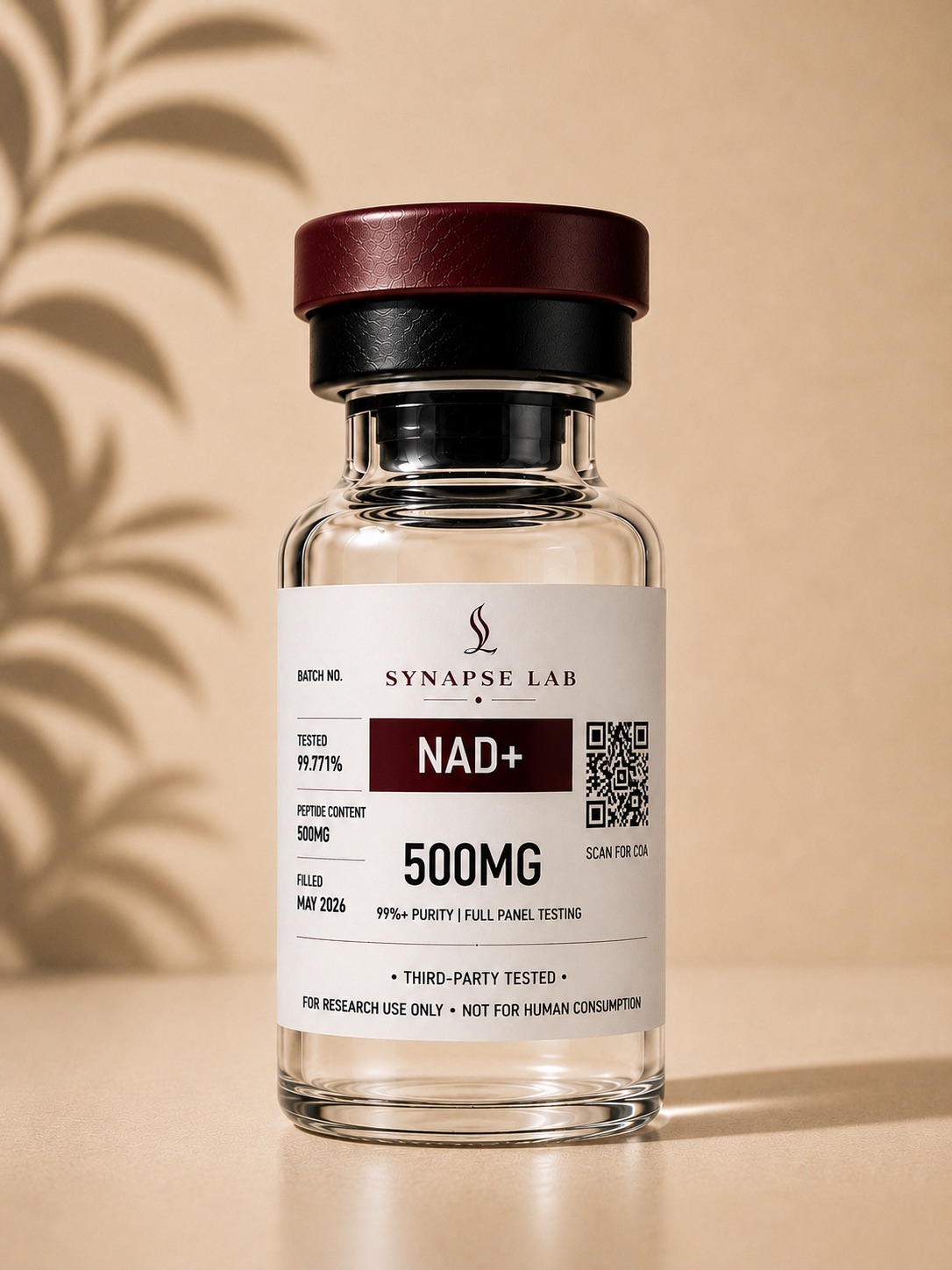
NAD+
Research Compound
Compound Overview
NAD+ (Nicotinamide Adenine Dinucleotide) is a naturally occurring coenzyme present in all living cells and considered essential for cellular energy production, metabolic regulation, mitochondrial function, and DNA repair processes. As a critical electron carrier within redox reactions, NAD+ participates in numerous biochemical pathways associated with ATP synthesis, oxidative metabolism, cellular signaling, and genomic maintenance. Within research environments, NAD+ has been extensively investigated for its interactions with mitochondrial respiration, sirtuin activation, PARP-mediated DNA repair systems, oxidative stress pathways, and age-associated metabolic decline. Researchers have proposed that intracellular NAD+ availability may influence a broad range of physiological processes involving cellular resilience, energy homeostasis, inflammatory regulation, and mitochondrial efficiency. Scientific investigations have also focused on NAD+ precursor pathways involving nicotinamide riboside (NR) and nicotinamide mononucleotide (NMN), both studied for their potential role in restoring intracellular NAD+ concentrations during aging and metabolic stress conditions. Due to its extensive involvement in enzymatic signaling networks and mitochondrial biology, NAD+ remains one of the most widely researched compounds within longevity, metabolic, and cellular energy science. Manufactured to strict research-grade standards, each batch undergoes independent analytical verification through ISO-accredited third-party laboratories for purity, identity, and consistency.
Molecular Formula: C21H27N7O14P2 Molecular Weight: 663.43 g/mol Other Known Titles: Nicotinamide Adenine Dinucleotide
NAD+ functions as a central coenzyme within cellular respiration pathways and mitochondrial ATP production. Research suggests it plays a key role in glycolysis, the citric acid cycle, and oxidative phosphorylation by facilitating electron transfer reactions required for energy generation.
Experimental studies have explored how intracellular NAD+ availability may influence mitochondrial efficiency, metabolic flexibility, oxygen utilization, and ATP synthesis within high-demand tissues. Researchers have additionally investigated whether declining NAD+ levels may contribute to age-associated reductions in cellular energy production and metabolic performance.
Its involvement in mitochondrial redox balance and electron transport chain activity has positioned NAD+ as a primary area of focus within metabolic and longevity research.
Scientific investigations have extensively examined the relationship between NAD+ and sirtuin enzymes (SIRT1–SIRT7), which are considered NAD+-dependent regulators involved in mitochondrial homeostasis, cellular stress adaptation, inflammatory signaling, and genomic stability.
Researchers propose that sufficient NAD+ availability may support sirtuin-mediated pathways associated with mitochondrial maintenance, stem cell regulation, metabolic adaptation, and cellular survival under stress conditions. Experimental models have additionally explored potential interactions between NAD+ signaling and pathways involved in healthy aging and tissue resilience.
NAD+ has been widely studied for its role in PARP-dependent DNA repair systems. Poly(ADP-ribose) polymerase (PARP) enzymes utilize NAD+ during cellular responses to DNA strand damage, helping coordinate repair signaling pathways associated with genomic stability.
Laboratory studies involving oxidative stress and ischemic injury models have suggested that restoration of intracellular NAD+ levels may support DNA repair activity, cellular viability, and resistance to oxidative damage. Researchers have further examined how excessive PARP activation may deplete intracellular NAD+ reserves, potentially impairing mitochondrial function and cellular recovery capacity.
These findings have contributed to growing interest in NAD+ within research focused on cellular aging, oxidative stress adaptation, and genomic maintenance.
Experimental investigations have explored the relationship between NAD+ metabolism and mitochondrial dysfunction within neuronal tissues. Studies involving aging and oxidative stress models suggest that NAD+ restoration pathways may support mitochondrial respiration, oxygen consumption efficiency, and neuronal energy balance.
Researchers have examined NAD+ precursor compounds such as NMN and NR for their potential role in maintaining mitochondrial integrity within brain and nerve tissue models exposed to metabolic stress conditions. Additional research has explored how NAD+-dependent signaling pathways may influence neuroprotection, inflammatory regulation, and neuronal survival.
Research involving metabolic models has investigated whether increased NAD+ availability may influence glucose homeostasis, lipid metabolism, insulin sensitivity, and mitochondrial substrate utilization. Experimental findings have suggested potential interactions between NAD+ pathways and energy-regulating enzymes associated with metabolic efficiency and nutrient sensing.
Additional studies have explored how NAD+ restoration may influence body composition, mitochondrial oxidation pathways, and cellular energy expenditure within age-associated metabolic decline models.
NAD+ has also been studied within cardiovascular and ischemia-related experimental models. Researchers have proposed that NAD+-dependent pathways may contribute to mitochondrial protection and cellular resilience during metabolic stress conditions affecting cardiac tissues.
Studies involving NAD+ precursors have explored potential relationships between intracellular NAD+ restoration, mitochondrial energy production, oxidative balance, and cardioprotective signaling pathways.
Age-associated declines in NAD+ concentrations have become a major focus within longevity science and mitochondrial biology research. Experimental investigations suggest that reduced NAD+ availability may influence mitochondrial dysfunction, oxidative stress accumulation, stem cell signaling, and impaired cellular repair systems over time.
Researchers continue studying whether restoration of NAD+ pathways through precursor compounds or direct supplementation models may support mitochondrial efficiency, metabolic resilience, and cellular maintenance processes associated with productive aging research.
NAD+ is supplied strictly for laboratory and research purposes only. Not for human consumption.
The Synapse Quality Standard
Every compound undergoes a rigorous multi-stage verification process before receiving our seal of approval.
HPLC Testing
High-performance liquid chromatography ensures precise purity measurement for every synthesized batch.
Mass Spec Verification
Mass spectrometry confirms molecular identity and detects trace impurities at parts-per-billion sensitivity.
Endotoxin Analysis
LAL assay screening for bacterial endotoxins, kept well below industry safety thresholds.
ISO 17025 Compliance
Our laboratory operations are accredited under ISO 17025, the international standard for testing competence.
Molecular Specifications
—663.4 g/mol53-84-9


